

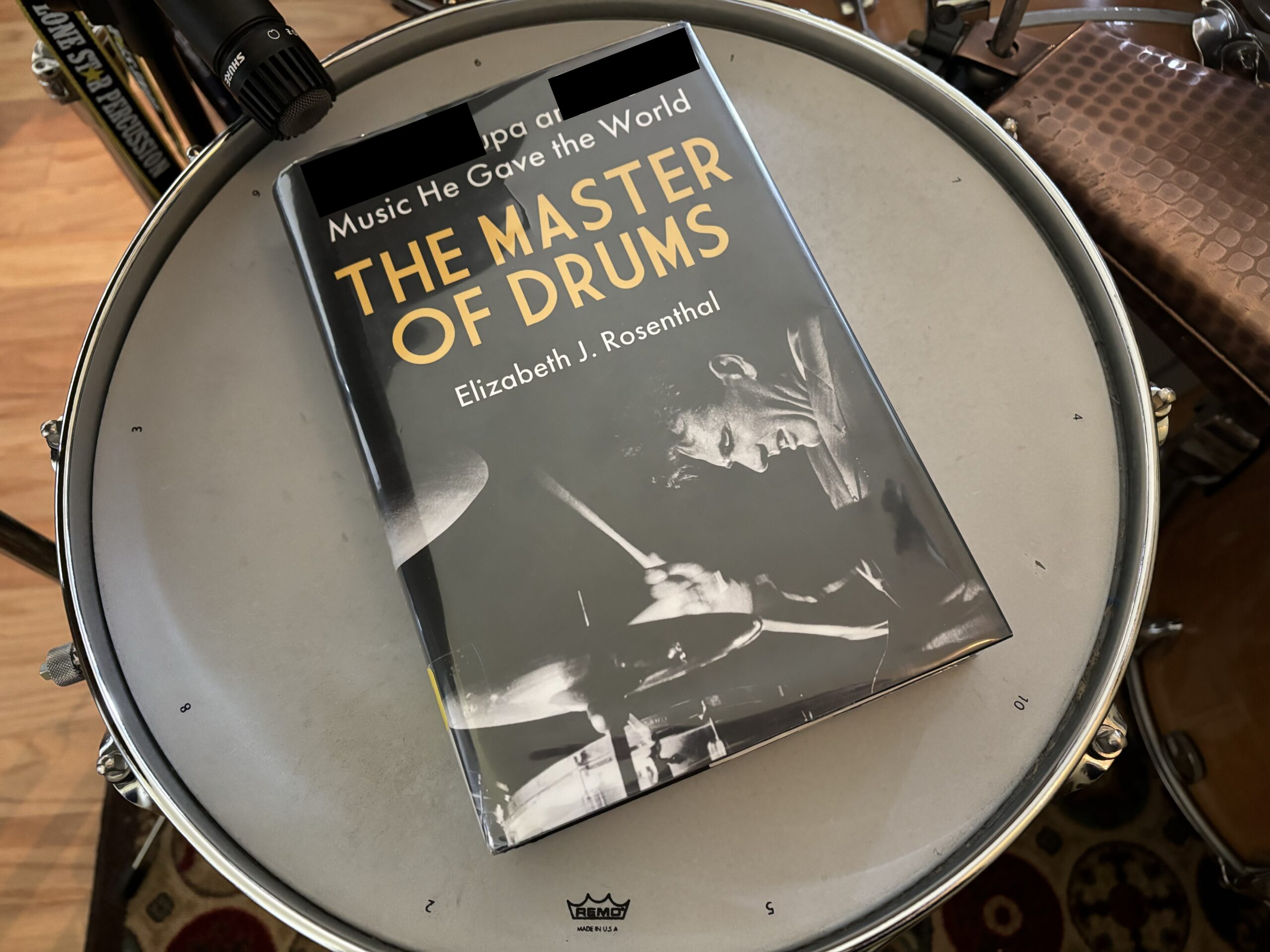
The Master of Drums: Gene Krupa and the Music He Gave The World
Elizabeth J. Rosenthal
Had high hopes for this one. The through-line from Gene Krupa to today’s drummers — Jimmy Chamberlain, Stephen Perkins, Travis Barker — still pulses with current, whether through his swing, tribal Afro-Latin flavors or just his style and swag. He busted down the door, brought the drums up front to the mainstream, continuing what New Orleans guys started. Was excited to read a new bio.
Instead, Master of Drums is page after page of names, dates, song titles, venues and quotes,
pulled from an exhaustive crawl of internet and archive, and a few personal interviews, lacking much context, nor woven into any real narrative. While the legwork and Googling is impressive, the volume of trivial, monotonous detail is maddening. In one scene, we learn that a band member’s kid thought highly of Mrs. Krupa’s banana bread.
There’s some good stuff: The broad contours of his rise and fallout with Benny Goodman. Vignettes about obsessive practice routines (working out on the pad while chatting with guys on the bus) and broad taste in music. Walking the walk on racial integration in his bands. Insightful anecdotes about his generosity with time and money. Homages from Rock Olympus — Bonzo, Moon, Ward, Palmer, Peart — about how Krupa’s late-50’s bio-pic set the hook.
Hard to get past the whiffs here, though. The author is apparently unaware that the Bo Diddley beat, which she credits Krupa with inventing, is simple 3-2 clave. One page is devoted to appearances of Krupa signature showpiece “Sing, Sing, Sing” in TV and advertising. Wild stretches at metaphor, such as in the run-up to WWII, Krupa’s “hair-raising single-stroke roll in triplets, uncaged as the band joined in for a last, raucous statement, suggested world turmoil to come.”
There’s also a desire to link Krupa to every drummer who ever played a vaguely African tom pattern, and a bizarre fixation on the Spanish word “duende” to describe Krupa’s energy and life force.
Rosenthal deserves credit for the attempt. As Krupa family and associates pass on, it’s no doubt harder to uncover new stories and angles on the legend. But an endless string of quotes, loose tangents and a mind-numbing roll call of names, dates and places gives us only a superficial understanding of the man and artist. An opportunity missed.