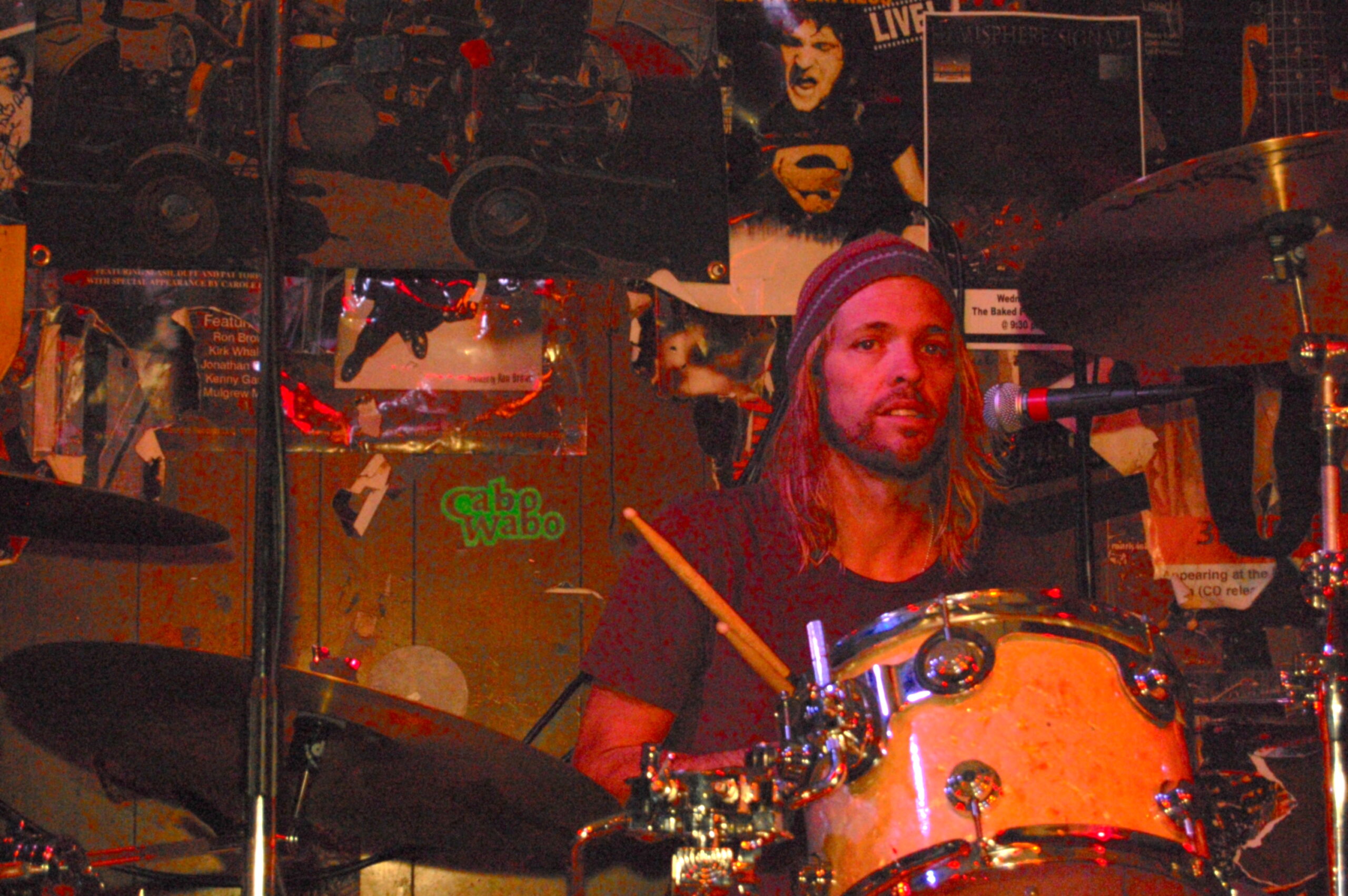


Shawn Lee is a songwriter, producer and multi-instrumentalist from Wichita, Kansas. Since the mid-1990s, he’s lived in London after signing a record deal with global music ambassador Gilles Peterson. To date, he’s released a few dozen collections of beats, breaks, full albums and collaborations spanning an eclectic range of genres.
There are groove-heavy, percussive instrumentals that reflect his love of library music (music made for ads, TV, video games and other visual mediums, today known as production music); dips into 80s synth fun as alter ego David Fostex; modern takes on classic soul; collaborations with Chinese zither specialist Bei Bei; and most recently durable success with co-songwriter Andy Platts in smooth-rock project Young Gun Silver Fox (‘yeah, you could call it yacht rock,’ Lee says).
When not recording his own material, producing others, or collaborating, Lee can often be found out on short tours as a sideman, playing guitar, bass or drums. Or he might be putting together documentaries, such as the Library Music Film or a forthcoming book of photos and interviews from the studios of friends and musicians. He’s definitely collecting vinyl and CDs from the road, and adopting all manner of stray instruments from eBay to fill his whimsical London studio. Yet even with his prodigious output, Lee considers himself a drummer first and brings a drummer’s sensibility to all of his work. Lee and I spoke in London over the course of two interviews in 2017 and 2018.
DRUMMER FIRST
Syncopate Mag: You play guitar, bass, keys, drums. You also produce other artists. But you consider yourself a drummer first.
Shawn Lee: Yeah. I actually started on guitar, then drums about a year later. And I played a lot of drums for awhile. Then when I started to write and record songs, I moved back to guitar. I think there’s a stigma with drums and drummers. As if you’re less musical. You’re the guy that hangs out with musicians.
SYNC: The old joke.
SL: Yeah. But it’s sorta real. It’s hard to come out from behind the kit and be taken seriously. I’ve worked really hard to shed that. I became like an undercover drummer. When I started writing and recording, I realized that getting a drum track wasn’t about blowing people away with amazing chops. I just want to play a nice beat.
SYNC: I’ve seen you a couple of times when you’ve toured America. You were playing bass one time and guitar another. But I often see photos on your Instagram where you’re behind the kit on some European tour on in the studio.
SL: I’m still a bit of a drum monkey. Still doing it. I think I’m actually drumming more now than I have in maybe 30 years. The last six months, I’ve probably done a drum session for someone every month. I’ve played on a whole album as well. Playing for people I don’t know, getting called for sessions from links in the network.
SYNC: But you’re primarily known as a one-man band, solo recording artist. Why do you think you’re getting calls to play kit on sessions?
SL: I don’t know. I think people see something slightly different in me. Someone that gets a good sound, has a good feel, plays songs and can play in the studio. Playing drums in the studio is a very different thing than playing live. The way you hit, the tones, what you don’t play. Some drummers tend to play really hard live. Then they get in the studio and hit too hard. Under a microphone, they can’t change their dynamic because that’s just how they play. If I’m producing a band and they have a drummer who’s playing really hard, I’ll sometimes ask, ‘Can you hit the snare softer, the hi-hat softer?’ They can’t do it. They try it for a second, then revert back.
SYNC: In the studio, are you focused on how you’re hitting the drum, where you’re striking it…
SL: Totally, yeah. It’s all about tone. It’s very much about the drums that you use, the cymbals you use, how you hit ‘em. Doing more with less is what playing drums in the studio’s all about. My worst nightmare is overplaying. It really is. The more I play, the more I feel ideas bubbling up that want to come out. But you kinda have to hold it at bay a bit. I’m not gonna let my hands just do whatever they want. I want to hold it back.
BAND GUY
SYNC: It seems like you’ve worked on your own most of your career. Have you ever been a ‘band’ guy?
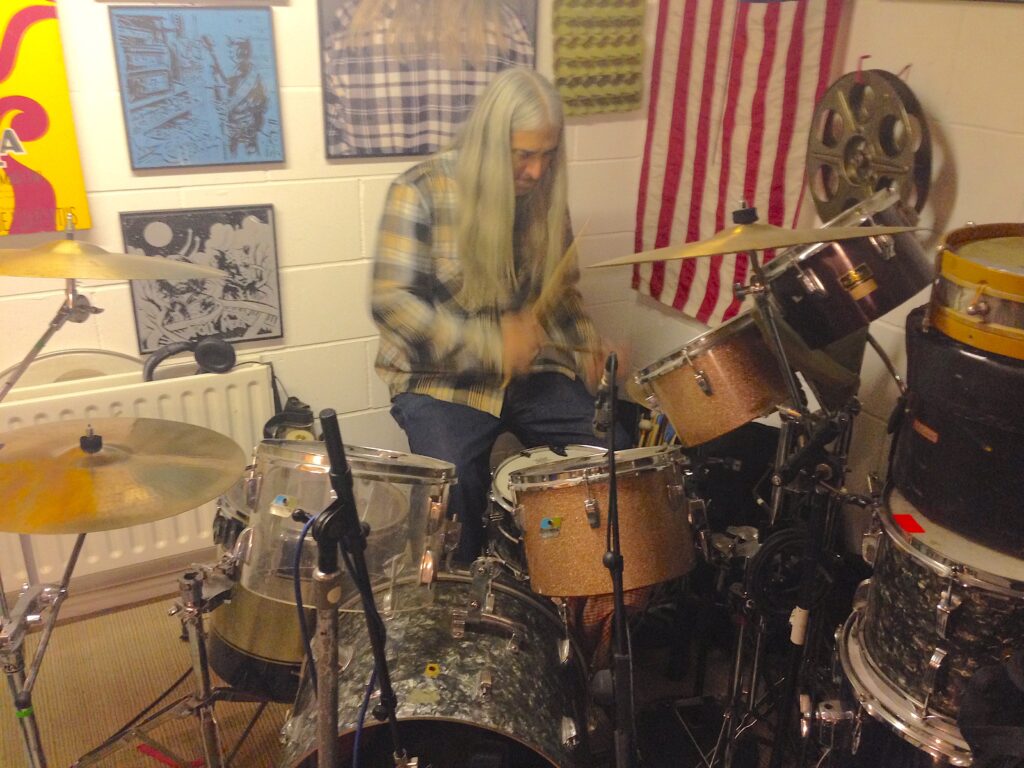
SL: Well, I guess I sorta haven’t been. I’ve always been like a lone wolf. I’ll play in other people’s things, I’ll work with other people. When I moved to L.A., before London, I moved there to to do my own thing. Invariably I ended up playing in bands. I love music, I like to play music, I like to be around talented people, I like to be busy and do different things. So if someone was like ‘Hey man, do you wanna play drums on this recording? I got these gigs, do you wanna play cowbell?’
If it interested me, I’d do it. If something comes along, the people are cool, the music’s cool, I’d just do it. I wasn’t worried about how it looks. I was always a jack-of-all-trades. But back then, people were like “Oh, you gotta do one thing and master that.”
SYNC: Specialize.
SL: Specialize, yeah. ‘That’s the only way you’re ever gonna make it.’ I disagree. And that doesn’t interest me. Every situation, you learn something which you bring back into what you do. You’re constantly gathering experience, information, redefining and exploring. You don’t get stuck in your little narrow box.
SYNC: What about touring? I know you tour some these days, but did you make a specific decision at some point not to be a touring guy?
SL: I kinda did, yeah. I love the studio. If I was touring, I’d be wanting to do my own shit. Because if you’re out touring with other people, playing with other people, you’re spending a lot of time and energy with somebody else, and you don’t spend a lot of time playing music. So you have to decide if it’s really worth it.
I liked playing with people, but I preferred doing sessions. Because there’s a beginning and an end. Also sometimes people just wouldn’t ask me to do live stuff because they didn’t think I’d want to do it. Or they’d think I was too busy. I reckon I’ve lost out on some things over the years from people assuming that, thinking I’m too busy doing my own thing and wondering why I might want to play, like, triangle in someone’s band.
But most of the time, if I have time to do it, if there’s cool people involved, if I like the music, then yeah, sure, I’d love to go play in Barcelona. I’d love to do this little German tour. If there’s a beginning and an end, it’s kinda like why not?
SYNC: But would you want to be away from home for, like, six months now?
SL: Oh, hell no. Even when I’m doing my own thing, the longest I’m ever gone is maybe a month. Most of the time I’m only gone for like 10, 12 days at the longest. Usually it’s only like two, three, four days. Short and sweet. Maybe a week if I go to America or whatever.
LIMITATIONS, PLATEAUS & ORIGINALITY
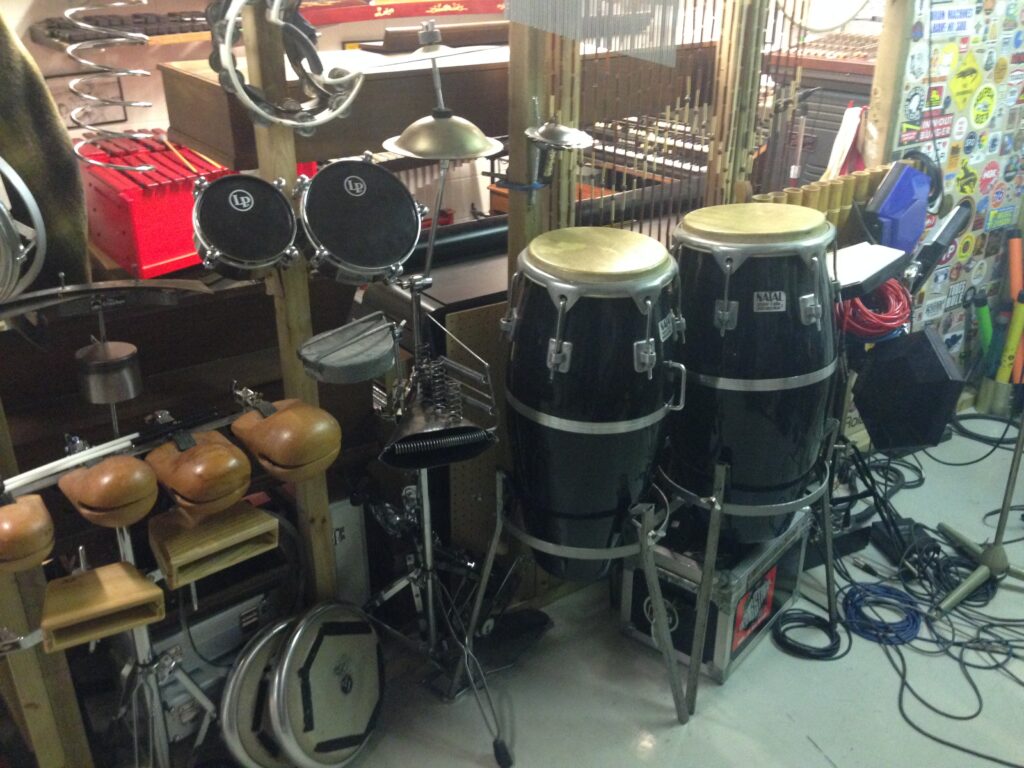
SYNC: You play most of the classic rock & roll instruments — drums, guitar, bass, keys — clearly well enough to make interesting solo records and lead projects. Do you feel like you’ve plateaued on any of the instruments?
SL: I’ve plateaued on everything. A lot of times it’s more about refining rather than increasing the vocabulary. It’s about doing the things you do more efficiently. If I was just playing guitar, I still wouldn’t be putting guitar players out of work. I’m good, but what I do is more nuanced and subtle, simple and to the point. I work with musicians all the time and sometimes think ‘Everybody’s better than I am. I can’t play half the shit they can play.’ But then I also realize that none of them could do what I do.
SYNC: If you’re hanging around better musicians, you’re hanging around the right musicians, right?
SL: Exactly. They up your game. That’s who you want to play with. I always want to play with people better than I am. They make you better, keep you on your toes. You don’t necessarily want to be the best musician. You want to think, like, ‘Yeah, OK, I’ve worked with some incredible people and they respect me. I must be doing something right.’
I think what a lot of musicians do, ones that are really, primarily, into one instrument, they keep playing and accumulating vocabulary. Then they can play anything and they tend to get more and more technical. But now because they can do anything, they often end up doing nothing. There’s no strong direction or focus. They just get more and more technical, but were better when they could play half as good. There was more enthusiasm for what they did. It wasn’t about being fancy. Sometimes feeling like you were slightly limited, you worked harder within your capabilities.
SYNC: Working within your limitations.
SL: Right, working with limitations. I think for me, playing a lot of instruments, it makes that easy. I pick one up, get better at that. Then I can come back to another thing and maybe that makes you better on the other thing. You bring something back. It keeps it fresh and interesting. In a way, I don’t plateau. I’m constantly doing different things.
But I’m not trying to learn more licks on guitar, for example. I’m playing the same licks I’ve always played. But it’s about playing them in the right place, at the right time, with the right feel and the right sound. It’s the economics of making every note count. Do more with less. That’s the evolution of the game. Like BB King.
SYNC: Oh, man. Talk about a guy with one move. In a great way.
SL: Yeah! One move. But it was the best move. And he executed it with so much feeling, so much style, every time. It was so authentic, so him. I think sometimes people get hung up on originality. I think it’s just about doing stuff really good, doing your thing and doing it really good. Being the best at what you do and the way that you do it. That’s what it’s about. It’s not about ‘Has anybody ever done this before?’
SYNC: I think it’s cool when bands and artists reach for something they haven’t heard yet, though. Or combine a few things in fresh ways. I always go back to Jane’s Addiction. At that point in my life, mid high-school, they just sounded so different and original. But you listen close and could pick out the references: Bauhaus, the 80’s goth, Zeppelin, funk and shred-metal. All those guys had unique, individual approaches that made it sound fresh and vigorous.
SL: Yeah, you could hear the influences. But I remember hearing them and thinking they were quite unique. And Perry was quite like, whoa, you know…
SYNC: Yeah. And Perkins. Stephen Perkins already had his own thing at that point. Young guy, but already a signature sound.
SL: Oh yeah, Perkins. Fantastic. I have a Perkins story. I was living in L.A. and I used to see him around. I was somewhere, playing somebody else’s kit. I don’t even remember who I was playing with, but Perkins was there. Might have even been his kit, I don’t remember. But I remember I played this fill I’d never played before and I never played again. I don’t know what it was, but it was like a magic moment. And it was just like, maybe because you’re playing somebody else’s kit, your hands just go some place. Like you made some lucky shot, some impossible thing. Those things are sad because you know it’s a one-time thing, you can never get it back.
And Steve Perkins came up to me after the set and he was like ‘Man, you did this one really amazing fill.’ I said, “I know! What was it? Do you remember what I did?” (laughs). It’s one of the handful I’ve ever done, my greatest hit.
SYNC: That’s awesome. Props from Perkins.
SL: Yeah, he’s good. A friend of mine played in this jam band with Perkins and Mike Watt.
SYNC: Banyan?
SL: I don’t remember. What were they called? It was Eric Garcia, Mike Watt, Stephen Perkins, my buddy Josh. I remember taking Gilles Peterson to see them play in Hollywood. He was like ‘What the fuck is this?’ Then they started doing Porno For Pyros. My friend Josh was in the first lineup, playing winds, bass clarinet, saxophone. Multi-instrumentalist guy, could pick up anything, figure out a part. Yeah, I saw Perkins play a lot. He was always really good. Cool, cool style. I wasn’t even really into that kind of music, but you could hear there was something really cool in Jane’s Addiction.
SYNC: He had a voice. Still does.
SL: Yeah. Early 90s was a cool time in Los Angeles. Fishbone, Jane’s Addiction, Eleven.
SYNC: Jack Irons, yeah.
SL: Yep, Jack Irons. I used to see them around a lot. It was a cool scene.
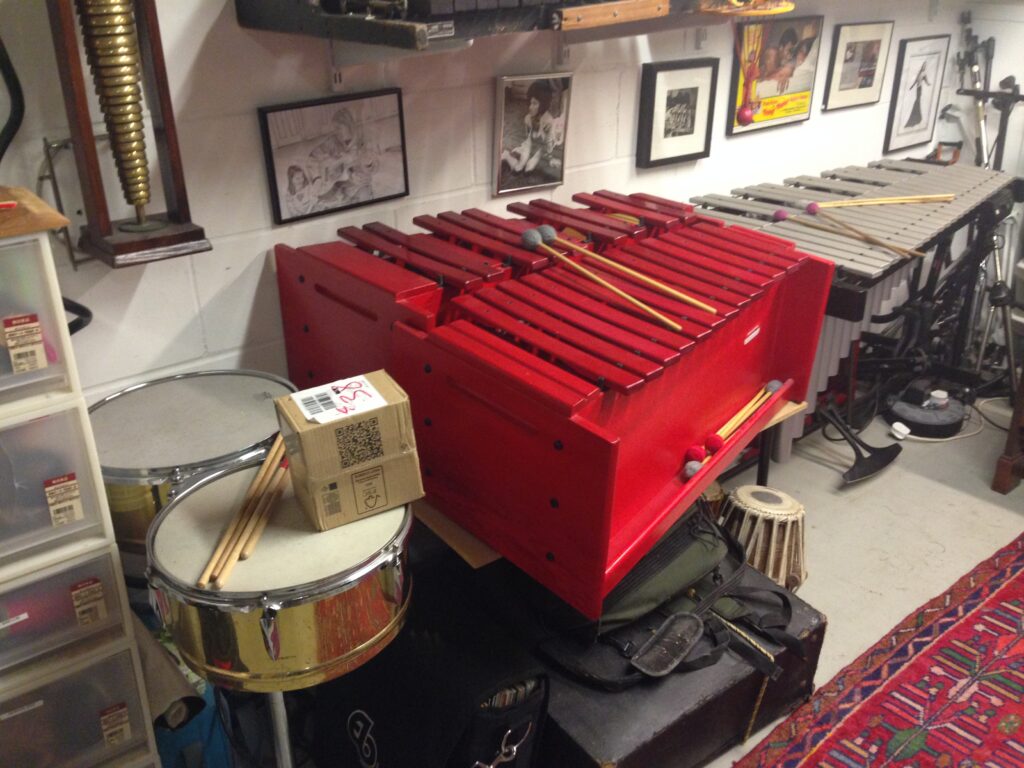
ON WORKING FAST AND KEEPING FLOW
SYNC: Given your prolific output, I assume you work pretty fast.
SL: I work really fast.
SYNC: Do you keep track sheets and stuff? Like, ‘OK, I did the drums, now…’
SL: Never. The only time I write anything down is if I’m away for a bit and I’ve got a bunch to do. I might write a quick hit list so I can come in and be like ‘Checked it off. Yeah, turn that down, more reverb on that.’
I like to come into the beginning of a session and get as much done as possible. So that I’m feeling good, I’ve got some momentum. I’ve sorted that out, I’ve bounced that, I sent somebody that, I’ve compiled some stuff for the radio show. It’s this constant kind of conveyor belt of getting something to the next stage. Finishing something, sending something off, dialing in something that you just started. It keeps it fresh because you’re doing lots of different things and you don’t get that fatigued thing where you’re like, ‘Uh, I don’t know what to do next. I’ve hit a wall.’
If I do feel like that, I’ll just move on to something else. It’s like excavating layers of things. Once you’ve got the basic track of something, you can think about the next layer, the next overdubs. I don’t wanna just throw loads of stuff on there and then sort it out later.
SYNC: What’s your routine?
SL: My routine depends on my workload. But my normal thing, if I’m not working to a deadline, is just come in at 11:00, work until about 7:00. Have lunch. Very civilized. I work really fast, really focused. It gives me a good balance on my time, for family time and sorting out other shit. Chasing things, all the admin work. That’s a part-time job and then some.
If I’m working to a deadline, depending on (engineer) Pierre’s availability, I’m here three, four days a week. And that’s kind of about it, really. And then I’m doing other stuff.
SYNC: When Pierre comes in, he’s behind the board and you’re playing?
SL: Yeah, exactly. Things are pretty wired in.
SYNC: Do you make commitments as you go?
SL: Totally. That’s the name of the game. It’s also about trusting that your first thought is the best thought. It’s about believing in the idea, not being wishy-washy. But I’m also quick to give up on something if I know it’s not happening, I won’t try to square peg it into a round hole. That just comes from years of experience and being decisive.
SYNC: You’re really prolific, though. You must throw a bunch of stuff at the wall, yeah?
SL: I do. But in a way that’s part of it. There’s no real pressure, other than the pressure I put on myself to do it better and get better at what I’m doing. I just trust in the process of what I’m doing. For me, there’s no failure in making a tune. The process itself is the reward. What happens in the end is sort of up to the gods, and sometimes it’s for other people to decide what it means. For me, the best thing is when you make a tune and it feels like that you didn’t even make it. You feel like the tune always existed, but you just found it.
SYNC: Those don’t come very often, do they?
SL: They don’t. But the thing is they come because you do lots of shit. They come because you’re always doing the work, creating an environment where magic can happen. When you’re doing stuff all the time, it keeps you loose and that’s where the good stuff happens, when you relax. A lot of people think ‘Oh, this record has to be the ultimate. This song has to be as good as…’
SYNC: You’re not going to hit a home run every time.
SL: No, you can’t. Once you decide not to do that, I think that’s when you do something really good. You do something, trust your instincts, get it done, and move on to the next thing.
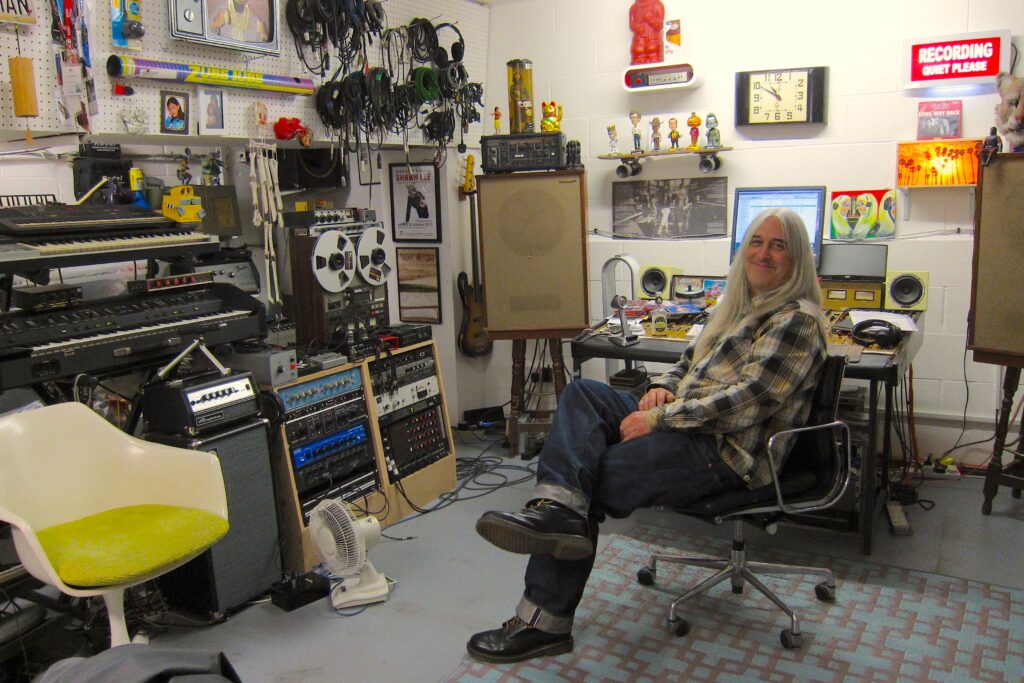
SUCCESS AND WHAT IT MEANS
SL: For me, there’s creative and artistic success. But then there’s the success of being able to survive and keep doing what you love to do. I think the lack of other kinds of success sort of indirectly fuels my hunger to always do something better. I’m not worried about being relevant, I’m not worried about being cool. I’m not worried about selling records. As long as I can put food on the table, pay the rent and keep doing what I love to do, then that’s it. That’s the name of the game.
SYNC: That’s the dream.
SL: That’s the dream. I’ve seen many people have bigger splashes in recognition, get nominated for a Grammy, have a hit and get love from the press. They get on big TV shows, they’re hip, on big stages at festivals. Most of them have their 15 [minutes], then it’s like a slow fade to gray. I’ve never ‘made it.’ I’m still trying. I’m still ‘making’ it.
We’ve made a film, we’ve put love into it, into making something good. That’s how I view anything anyway. You do it because you wanna do it. And whatever happens, happens. And you share it with the rest of the world and the people who dig it, dig it. And it all adds up to more good shit in the world. It’s one of the only things I can do, and maybe the best use of my energy. It’s the way I can put something cool into this world, other than taking care of my family.
SYNC: I think you’re an inspiration, man. You’re doing it, making music. Doing something that you love and making a living at it.
SL: Thank you. Well, what’s life about? I can’t think of anything worse than doing shit you don’t wanna do. Being pissed off about it and frustrated. That’s just a waste of life. Because we’re all struggling to survive on every level. Mentally, emotionally, financially. Nothing’s easy. It’s a struggle and sometimes you’re doing good and sometimes you aren’t.
SYNC: I think we’re cursed at birth. I think everybody’s creative, but some of us are cursed with a need to share it, whether the world asks for it or not. And so you have to follow that. We can’t sell insurance, you know?
SL: Totally. There’s nothing else that I can do. There’s nothing else I’m good at. I got nothing else to give.
SYNC: Some cats can sell insurance, make a nice salary, take care of their family. To them, that’s enough.
SL: Yeah. And then they can do something as a hobby, for a laugh. That’s enough. That’s pretty cool, actually.
SYNC: Yeah. Photography or whatever.
SL: Yeah. I envy people like that, somebody that’s got a really good gig, where they do good and don’t seem to hate it. They kind of enjoy it and it gives them the freedom to be able to do this and do that. That’s kinda winning. You can do that and you don’t have to make any money from it. Just do what you want to do. There’s a beauty in that. But for me, I’m all in. There’s no other way. I think the only reason I survive is because there’s no Plan B. There’s no other choice. There is no failure. You can’t…you gotta keep going. You just gotta keep going.